

Fiber Optic
Laser speeds. Ultimate bandwidth backhaul
Deploy durable optical networks, fiber splicing, and high-speed trunk links designed to handle enterprise data transfers over long distances.
Challenges & Solutions

High Attenuation & Unprotected Cable Runs
Poor fiber splicing leads to signal loss, while unarmored lines laid in shallow paths are vulnerable to snapped fibers from local digging.
- Light Loss Drops: Bad splices weaken signals, causing transmission drops.
- Cable Cuts: Excavation projects snap unarmored fiber cables.
- Short Limits: Copper cables cannot carry gigabit data over 100 meters.
- Weather Faults: Water in splice closures damages glass fiber nodes.
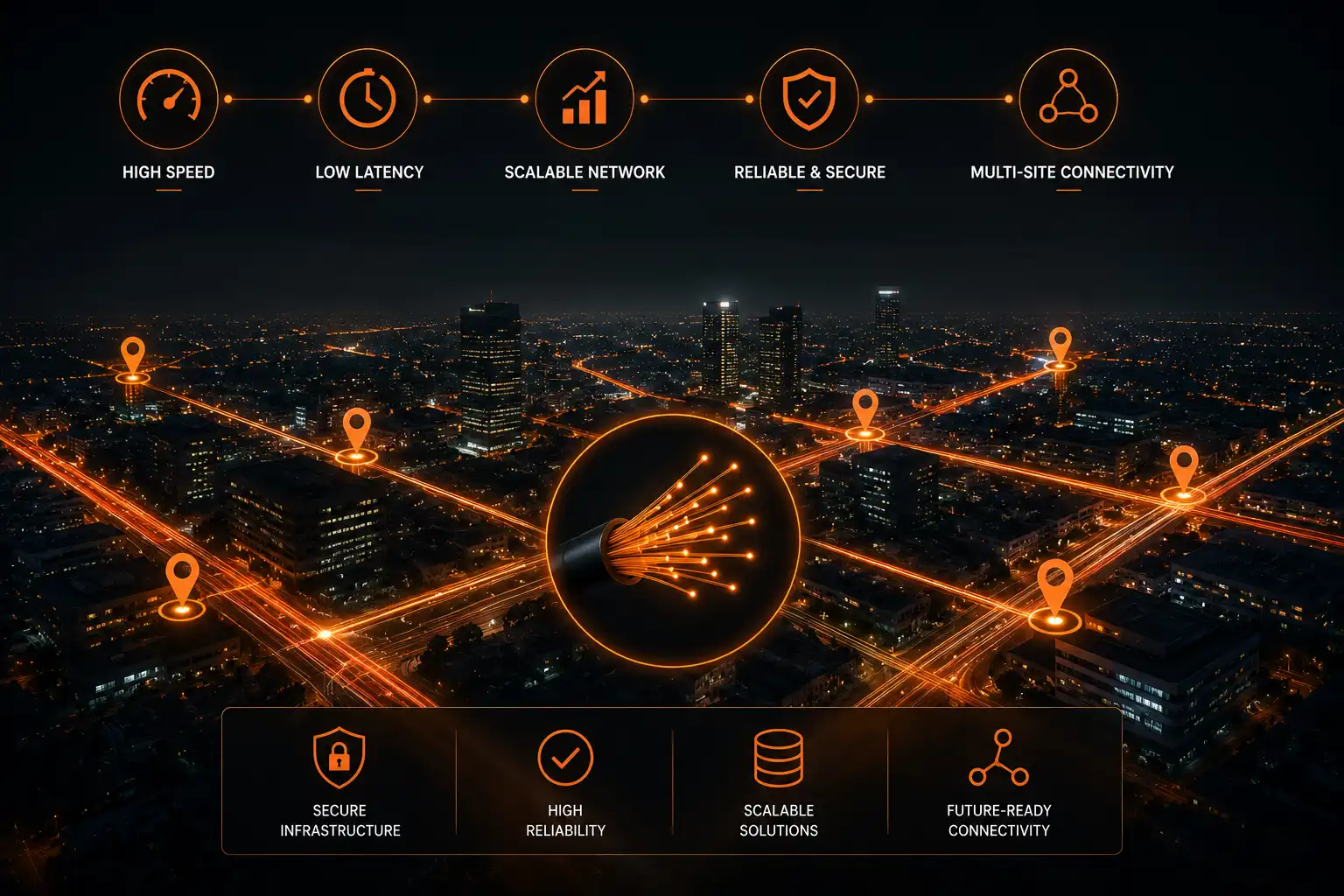
Precision Fusion Splicing & Armored Conduit Layouts
We run optical fibers inside armored sleeves, connecting cores using precision fusion splicers to reduce dBm loss.
- Fusion Splicing: Align glass cores perfectly to minimize signal attenuation.
- Armored Conduits: Lay fiber inside double-wall plastic sleeves to stop cuts.
- Kilometer Speeds: Send gigabit signals over miles without signal repeaters.
- Gel-filled Boxes: Waterproof dome joints stop rain moisture leaks.
How It Works
Route Trench
Calculate optical pathways and pull pits.
Pull Fiber
Blow armored fiber cables inside under-road ducts.
Fusion Splicing
Splice glass fibers inside junction panels.
OTDR Testing
Validate signal light level drops to confirm quality.
Key Features
Fusion Splicing
Splice multi-core glass fiber cables with low signal loss.
OTDR Validation
Trace fiber paths and pinpoint light leaks.
Armored Conduits
Install heavy under-ground conduits to prevent snaps.
FTTX Deployment
Deliver fiber links directly to desks or buildings.
FTTX Splitters
Divide optical trunks to feed multiple endpoints.
Light Loss Alerts
Detect fiber bend alerts before links snap.
Looking for Fiber Optic Deployment?
Contact HTECH for professional fiber splicing and duct installation.
Request a Demo